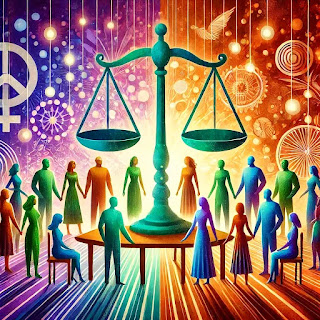
Gender
discrimination— the unfair treatment
of people in view of their orientation — stays an unavoidable issue in current
culture. Despite decades of progress towards equality, the battle against this
deeply entrenched bias continues. This article explores the various dimensions
of gender discrimination, its root causes, its impact on individuals and
society, and the steps necessary to create a more equitable world.

Understanding Gender Discrimination
Gender
discrimination refers to any action or decision that treats someone unfairly
because of their gender. This bias can manifest in numerous ways, including
unequal pay, limited career opportunities, stereotyping, and exclusion from
decision-making processes. While both men and women can face gender-based
discrimination, women and marginalised gender groups bear the brunt of this
inequity worldwide.
The Roots of Gender Discrimination
The
origins of gender discrimination lie in historical, cultural, and societal
norms. Patriarchal systems, which have dominated human civilisation for
centuries, perpetuate the belief that men are inherently superior to women.
Such beliefs have shaped laws, education systems, and workplace structures,
embedding gender inequality into the fabric of society.
Traditional
gender roles also play a significant part. From an early age, children are
often conditioned to accept predefined roles—boys are taught to be strong and
assertive, while girls are encouraged to be nurturing and passive. These
generalizations limit individual potential as well as build up unfair
practices.
Manifestations
of Gender Discrimination
Workplace Inequality
One
of the most noticeable types of orientation separation happens in the work
environment. Ladies frequently experience an “unfair limitation,” an
undetectable obstruction that keeps them from progressing to influential
positions. Despite possessing equal or superior qualifications, women are
frequently overlooked for promotions and face wage disparities compared to
their male counterparts.
Educational Disparities
Not
everyone has equal access to education around the world. Girls in developing countries are often denied the
opportunity to attend school due to poverty, societal norms, or safety
concerns. This illuminating opening multiplies instances of sadness and cutoff
points monetary and social adaptability.
Gender-Based
Violence
Discrimination
also manifests as violence against women and gender-diverse individuals. From
domestic abuse to sexual harassment, these acts of violence are rooted in power
imbalances and societal acceptance of harmful behaviours. Victims often face
stigma and a lack of support, further exacerbating their plight.
Health Inequalities
In
the healthcare sector, gender discrimination can result in inadequate attention
to women’s health issues or dismissal of their symptoms. The gender gap in research jeopardizes women’s health
outcomes.
The
Impact of Gender Discrimination
The
consequences of gender discrimination are far-reaching. For individuals, it
limits personal growth, self-esteem, and opportunities. On a societal level, it
hampers economic development, as the talents and contributions of half the
population remain underutilized. Businesses lose potential innovation and
productivity when they fail to embrace diversity.
Mental and Emotional Toll
Encountering
separation can take a huge mental cost, prompting uneasiness, despondency, and
a feeling of vulnerability. For those who internalize societal biases, the
impact can be lifelong, affecting relationships, career ambitions, and overall
well-being.
Combating Gender Discrimination
Legislation and Policies
Governments
play a crucial role in addressing gender discrimination. Enacting and enforcing
laws that promote gender equality is essential. For example, the Equality Act
2010 in the UK provides a legal framework to combat discrimination in various
spheres of life. However, laws alone are insufficient without societal buy-in
and robust enforcement mechanisms.
Education and Awareness
Challenging
ingrained biases requires education. Schools must promote gender-sensitive
curricula that encourage critical thinking about stereotypes. Public awareness
campaigns can also highlight the harmful effects of discrimination and inspire
collective action.
Empowering Marginalized Groups
Creating
opportunities for women and gender-diverse individuals is key to achieving
equity. Mentorship programmes, skills training, and financial support can help
bridge gaps and empower individuals to break free from systemic barriers.
Workplace Reforms
Employers
must take proactive steps to eliminate gender bias in recruitment, promotions,
and pay. Implementing transparent policies, providing diversity training, and
fostering inclusive cultures can drive meaningful change. Companies that
prioritise equality often see improved employee satisfaction and better
financial performance.
The Role of Men in Gender Equality
Men
play an essential role in dismantling gender discrimination. By challenging
toxic masculinity, advocating for equal opportunities, and standing as allies,
men can help create a more inclusive society. Everyone deserves equal opportunities, regardless of gender.
A
Vision for the Future
Achieving
gender equality requires collective effort. It demands introspection,
challenging societal norms, and building systems that value fairness and
inclusion. While progress may be slow, every step forward—whether it’s a young
girl accessing education or a workplace embracing diversity—brings us closer to
a world where gender is no longer a determinant of one’s potential.
Final Thoughts
Gender
discrimination is not just a historical relic but a present-day reality that
continues to affect millions. Addressing this issue is not merely about justice
but about unlocking the full potential of humanity. By recognising and
dismantling discriminatory practices, we can pave the way for a brighter, more
equitable future.