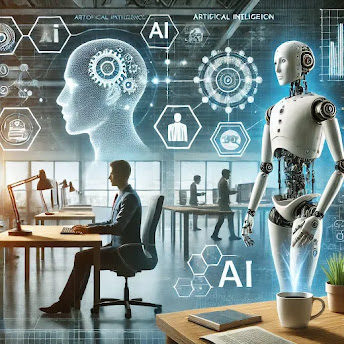
Artificial Intelligence (AI) is no longer a concept of
science fiction but now the driving force behind innovation in many industries.
From changing the way healthcare and education function to how entertainment
and customer service are being redesigned, AI is transforming how we live and
work. However, with any revolutionary technology, there come its own advantages
and disadvantages.
This article delves into the pros and cons of AI, shedding
light on its profound impact on society while maintaining a balanced
perspective. Whether you’re a tech enthusiast, a business owner, or a curious
observer, understanding these nuances is essential in today’s AI-driven world.

Pros of Artificial
Intelligence
1. Efficiency and
Productivity
One of simulated intelligence’s most celebrated benefits is
its capacity to perform errands quicker and more precisely than people. Via
robotizing dreary and tedious cycles, artificial intelligence opens up HR to
zero in on key and imaginative undertakings. For instance, in manufacturing,
robots powered by AI can work tirelessly, ensuring consistent output with
minimal error.
2. Enhanced
Decision-Making
AI algorithms can analyze huge amounts of data, find
patterns, and make predictions with a high degree of accuracy. This capability
empowers industries such as finance and healthcare to make data-driven
decisions. For instance, AI can predict stock market trends or help doctors
diagnose diseases by interpreting medical scans.
3. Personalization
From suggesting your next favorite Netflix series to creating
playlists on Spotify, AI personalizes experiences based on individual tastes.
This personalization increases user’s satisfaction and encourages greater
customer relationships.
4. Enhanced Inclusivity
AI has opened doors for the most marginalized section of
society. Speech-to-text applications, visual recognition software, and
AI-powered prosthetics are just a few names of how technology is inclusive.
5. Revolutionized
Healthcare
In the clinical field, artificial intelligence is changing
patient consideration. Predictive analytics can identify potential health
risks, while robotic surgeries offer unparalleled precision. AI also accelerates
drug discovery, potentially saving countless lives.
Disadvantages of
Artificial Intelligence
1. Job Displacement
The biggest concern regarding AI is that it may replace human
jobs. Automation has already caused significant disruption in industries such
as manufacturing and retail, and as AI advances, roles in customer service,
transportation, and even creative fields could be at risk.
2. Ethical Concerns
AI runs on data and algorithms. Often this creates biased or
unethical output. For example, there has been criticism over facial recognition
algorithms that cannot identify faces based on ethnicity, which gives way to
some serious questions over ethics.
3. Loss of Human Touch
While AI can do all logical and data-driven tasks, it tends
to lack emotional intelligence and empathy. For instance, the interaction with
an AI chatbot in customer service can sometimes feel impersonal and frustrating
when dealing with complex issues.
4. High Implementation
Costs
Creating and maintaining AI systems can be expensive. It
makes it difficult for small businesses to adopt this technology because
acquiring advanced hardware, hiring skilled professionals, and continuous
training can be expensive.
5. Security and Privacy
Risks
Since AI systems heavily depend on data, they make ideal
hacking targets. When there is a breach of sensitive information, it could mean
grave consequences ranging from identity theft to threats to national security.

Striking the Balance
AI is neither a panacea nor a Pandora’s box-it’s a tool whose
impact depends on how it’s used. Governments, businesses, and individuals all
have a role to play in ensuring AI is developed and used responsibly. The only
ways to mitigate these risks are through ethical frameworks, transparent
regulations, and education.
Conclusion
Artificial Intelligence is undoubtedly transformational,
solving some of the most difficult challenges for which humanity has ever
struggled with while raising new problems. Accepting the advantages and
redressing the disadvantages will allow us to use AI in order to achieve a
future that is at once technologically advanced yet equitable and inclusive.
As we journey through this AI-driven world, the question is
not whether we should embrace artificial intelligence but how we can make it
work for the best interest of humanity.